Australia-wide delivery
Friendly support from our Perth-based team

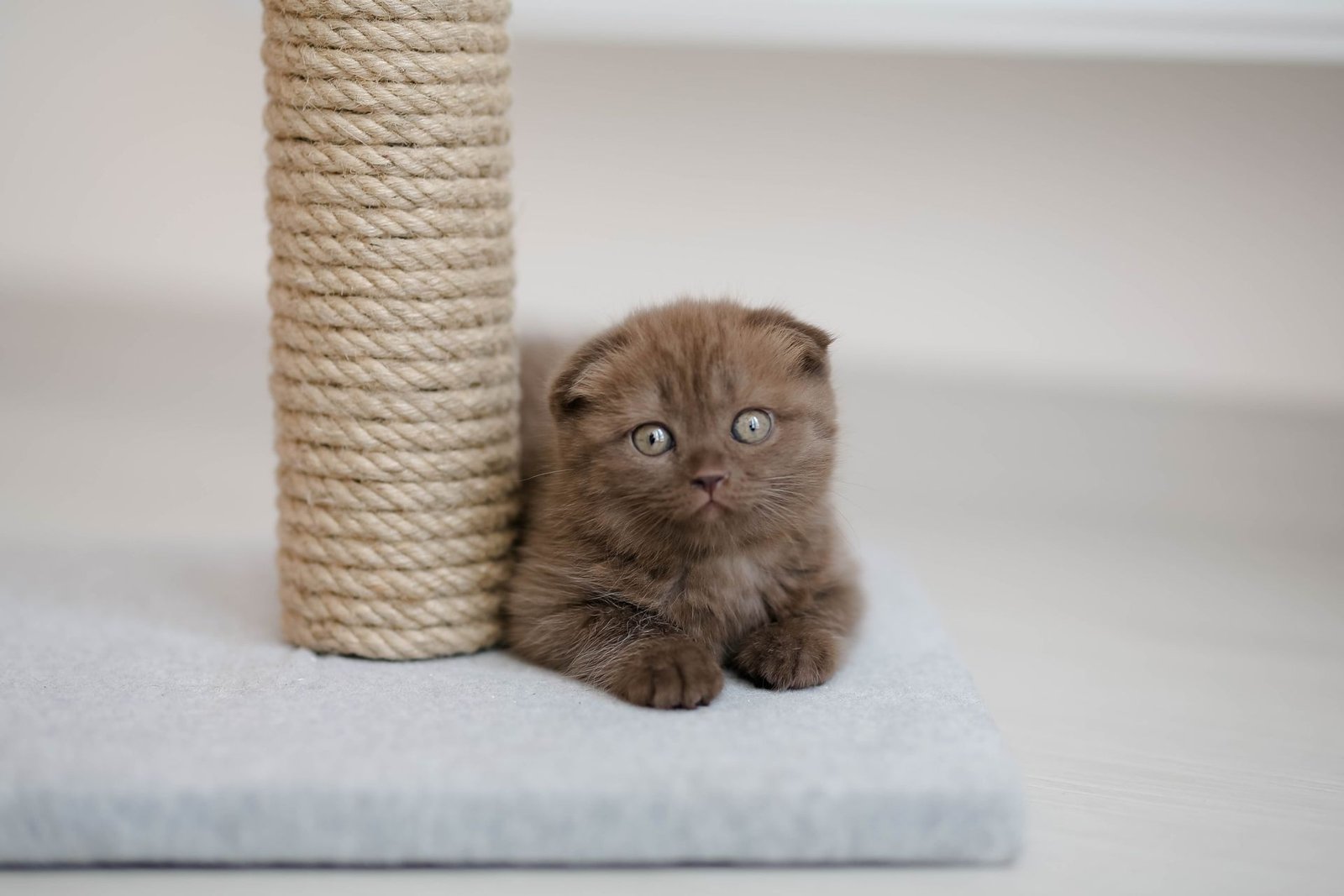
Move the post to where your cat already scratches, make sure it is tall enough for a full stretch and stable enough not to rock, then reward interest with play and catnip rather than forcing contact. Most cats adopt a correctly sized, correctly placed post within two to three weeks.
First, rule out the post itself
Before trying any encouragement technique, check whether the post is capable of being used. Most “my cat ignores the scratching post” problems are equipment problems wearing a training costume, and no amount of catnip fixes a post that is too short or too wobbly.
Push it firmly at the top. If it rocks, tips or slides, your cat has already tested it and reached the same conclusion. Cats will not commit their weight to something unstable, and one bad experience is usually enough to write the object off permanently.
Check the height against your cat. Encourage them to stretch up a doorframe and note where their front paws land. If the post’s scratching surface is shorter than that, it cannot deliver the stretch that makes scratching worthwhile — and the arm of your sofa almost certainly can.
Look at what they are scratching instead. This is the most useful diagnostic you have. A cat working on the carpet is telling you they want a horizontal surface, and a vertical post will not satisfy them however well you place it. A cat shredding a jute doormat is telling you about texture. Match the format to the evidence rather than to what you bought.
If the post fails any of these checks, replace it rather than persevering. A post tall enough for a full stretch with a weighted base solves most cases before training begins.
Move it somewhere that works
Placement is the highest-impact change available, and it is free.
Put the post directly in front of the furniture your cat is already scratching. This looks wrong and works well. You are intercepting an established habit at the exact spot the habit lives, and offering a better option at the moment of intent. Once the post is being used reliably — give it a fortnight — you can begin moving it, a few centimetres every few days. Move it too fast and the habit snaps back to the furniture.
Failing that, put it beside where your cat sleeps. Cats scratch when they wake. A post within arm’s reach of the favourite chair catches that behaviour automatically, without any training at all.
What does not work is the placement most people try first: a quiet corner, a hallway, a spare room. Scratching is partly territorial signalling, and a signal nobody sees is pointless from your cat’s perspective. The living room is the right answer.
Make the post more interesting than the sofa
Once the post is the right shape and in the right place, encouragement is straightforward.
Play at the post, not on it. Drag a wand toy up the sisal, let it disappear over the top platform, bring it back down. The cat’s claws land on the post incidentally, during something enjoyable. This is far more effective than any direct attempt to introduce them to the object.
Use catnip sparingly. Rub it into the surface or work it into the grooves. Not every cat responds — sensitivity is inherited, and a substantial minority of cats show no reaction at all — so if nothing happens, this simply is not your lever. Silver vine is a common alternative worth trying. Reapply weekly at most; constant exposure dulls the response.
Reward what you want. When your cat uses the post, that is the moment for a treat or attention. Cats respond to consequence timing far better than most owners expect, but the window is a couple of seconds, not a minute.
Feed or treat near the post. Positive associations build passively.
Make the furniture less interesting
Redirection works faster when both sides are addressed.
Cover the target temporarily. A blanket tucked in tightly, so the cat cannot get underneath, removes the texture that made the spot appealing. Double-sided tape on the furniture arm works on the same principle — cats dislike the sensation on their pads.
These are temporary measures, not solutions. Remove them once the post has been in reliable use for a few weeks. If you deploy deterrents without providing a good alternative, you have removed an outlet for a need that has not gone away, and the cat will simply relocate the behaviour.
What not to do
Never take your cat’s paws and move them against the post. It is the most common instinct and one of the most counterproductive actions available. Being physically restrained against an unfamiliar object creates exactly the negative association you are trying to avoid, and cats introduce themselves to new things on their own terms or not at all.
Do not punish. Spray bottles, shouting and clapping teach a cat that scratching is unsafe when you are present. The scratching continues when you are out, and you have added anxiety to the situation — which, since stress drives destructive scratching, tends to make things worse.
Do not throw the old post away the moment the new one arrives. A worn, shredded post carries your cat’s scent and is more attractive to them than clean sisal. Keep both for a fortnight and let the new one acquire scent before removing the old.
Do not conclude failure at day five. Two to three weeks is normal for adoption. Most posts declared rejected were simply not given time.
If it still is not working
A cat that ignores a well-sized, well-placed post after a month is usually telling you one of three things.
It may be a format mismatch — a horizontal scratcher in a vertical-post household, or a cat that wants a slanted board. Buying a second format is cheaper than continuing to argue with the first.
It may be a resource shortage. In multi-cat homes the rule is one surface per cat plus one, distributed across rooms. Cats will not queue politely, and a contested post gets abandoned by the lower-ranking cat, who then finds their own spot.
Or it may not be about scratching. Sudden destructive scratching in a cat that never did it before — particularly alongside spraying, hiding or overgrooming — usually points to stress rather than a missing resource. A new pet, a move, renovations or a change in routine can all trigger it. The post is still worth having, but you are treating a symptom, and it is worth a conversation with your vet.
For older cats that have stopped using a post they previously liked, consider whether stretching upward has become painful. Arthritis is common and underdiagnosed; a horizontal pad or a lower post is often the fix.
Related guides
- Our complete guide to cat trees and scratching posts — heights, materials, formats and placement in full
Almost every case of a rejected scratching post comes down to one of three things: it is too short, it wobbles, or it is in the wrong room. Fix those before reaching for catnip, then give the cat a fortnight to decide in their own time.
If the post you have is not up to the job, our complete guide to cat trees and scratching posts walks through choosing a replacement, with full dimensions on every product page so you can check the usable scratching height before buying.
Ready when you are
Find what fits your pet.
Browse thoughtfully selected accessories for comfort, play, travel and everyday care.