Australia-wide delivery
Friendly support from our Perth-based team

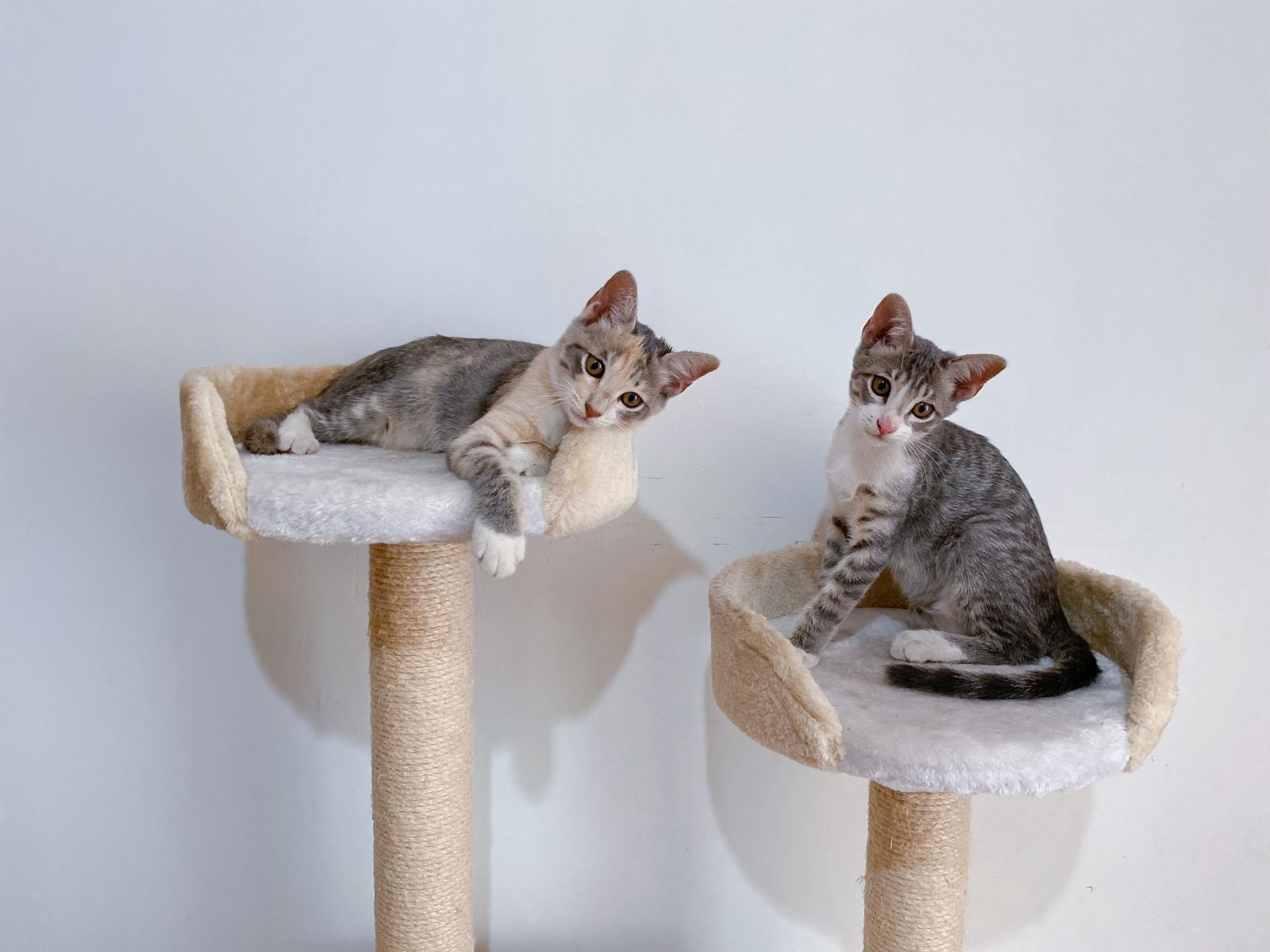
A cat scratching post should be tall enough for your cat to stretch out fully — for most adult cats that means at least 70cm of usable scratching surface — and heavy or wide enough at the base that it does not rock when leaned on. Position it where your cat already sleeps or already scratches, not where it suits your furniture.
Why cats scratch, and why stopping them is the wrong goal
Scratching is not misbehaviour. It is a normal, necessary behaviour that serves three separate purposes at once, and a cat deprived of an outlet will find one regardless of how you feel about the sofa.
The first purpose is communication. Scratching leaves a visible mark and deposits scent from glands in the paw pads. That is why cats so often choose the most conspicuous object in a room rather than a discreet corner — the mark is meant to be found. A post tucked behind a door is being asked to do a job it cannot do.
The second is claw maintenance. Scratching helps shed the worn outer sheath of the claw, exposing the sharper layer underneath. The third is physical: a full-body stretch through the shoulders and spine, which is why cats so often scratch immediately after waking.
This matters for a practical reason. Owners frequently approach the problem as “how do I stop my cat scratching”, and that framing leads to deterrents, sprays and frustration. The workable framing is redirection — making an appropriate surface more attractive than the inappropriate one.
One point specific to Australian owners: declawing is not a route available here. It is prohibited under animal welfare legislation except where genuinely medically necessary, and is opposed by the Australian Veterinary Association. Much of the advice you will find online is written for a US market where the conversation is framed differently. Providing a good scratching surface is not one option among several in Australia — it is the whole solution.
What actually makes a cat use a post
Four properties determine whether a post gets used. Get these right and most cats need very little persuasion; get them wrong and no amount of catnip will rescue it.
Height
This is the single most common failure. A post must allow a full vertical stretch, and most commercially sold posts are too short for an adult cat. If your cat has to hunch to reach the top, the post does not deliver the stretch that makes scratching satisfying, and it will be ignored in favour of the arm of the couch — which is, not coincidentally, usually taller.
Measure your cat rather than guessing. Encourage them to stretch up against a doorframe and mark the point their front paws reach. That measurement is your minimum usable scratching height.
Stability
A post that shifts, rocks or tips under load will be abandoned after one or two attempts, and cats are slow to give a rejected object a second chance. Weight in the base, a wide footprint, or a design that braces against a wall all solve this. When comparing two posts of similar height, the heavier one is almost always the better purchase.
Material
Sisal rope is the most reliably popular surface, but preferences are genuinely individual. Some cats prefer corrugated cardboard, some carpet, some hessian. If your cat has already chosen a target in your home, look at what it is made of — a cat shredding a jute rug is telling you something useful about texture.
Angle
Not every cat scratches vertically. Some prefer horizontal surfaces, some a slanted board. Again, the evidence is already in your home: a cat working on the carpet is a horizontal scratcher, and buying a tall vertical post for that cat solves nothing. Multi-level cat trees are useful partly because they offer several angles at once.
Choosing a height: a size guide in centimetres
Most sizing advice online is written in inches for American breeds. Here is the equivalent in centimetres, based on typical Australian household cats.
| Cat | Typical weight | Minimum usable height | Comfortable |
|---|---|---|---|
| Kitten / small adult | under 3.5kg | 55cm | 80cm+ |
| Average adult domestic | 3.5–5.5kg | 70cm | 90cm+ |
| Large adult | 5.5kg+ | 85cm | 120cm+ |
| Two or more cats sharing | — | 90cm | 140cm+, multi-level |
Two notes on reading this table. “Minimum usable height” means the scratching surface itself, not the overall product height — a 90cm tower with a platform at 60cm may only offer 55cm of actual scratching column. Check the specification, not the headline number.
Second, err upward. A post that is too tall costs nothing in function; a post that is too short is simply not used, and becomes an expensive ornament. If your cat sits between two sizes, take the larger.
Posts, trees and pads: which format suits your home
A single post suits a one-cat household with a specific scratching problem to redirect. It is the cheapest entry point and the easiest to place.
A multi-level cat tree does considerably more than scratching. It adds vertical territory, which matters more than most owners realise — cats resolve tension and feel secure by getting height, and in a small home the floor is often contested space. A tree with platforms gives a nervous or territorial cat somewhere to retreat that is genuinely theirs.
Flat pads and cardboard scratchers are the right answer for confirmed horizontal scratchers and are useful as a supplement rather than a replacement. They wear out faster.
For multi-cat homes, the working rule is one scratching surface per cat plus one spare, distributed across different rooms rather than clustered. Cats will queue for a resource, and queuing creates the tension that causes furniture scratching in the first place.
You can browse the full cat range to see the formats side by side, or go straight to cat trees and scratching posts if you already know the format you need.
Where to put it
Placement defeats more posts than any other single factor, and it is the cheapest thing to get right because it costs nothing to move a post.
Three placements work reliably:
- Beside where your cat sleeps. Cats scratch on waking. A post within a metre of the bed or favourite chair catches that behaviour at the moment it happens.
- Directly in front of the furniture being scratched. This feels wrong aesthetically and works extremely well. It intercepts an established habit at the exact location the habit lives. Once the post is being used reliably, you can move it — a few centimetres at a time, over weeks.
- In a social, high-traffic room. Because scratching is partly territorial signalling, a post hidden in a spare room is doing half a job. The living room is not a compromise; it is the correct location.
The placement that does not work is the one most people try first: somewhere out of the way, chosen to keep the post from spoiling the room.
Common mistakes
- Buying on price and height together. A tall, light post is worse than a short, heavy one. Stability first.
- Assuming one post is enough. One post in a two-cat home is a contested resource.
- Punishing the cat. Spraying, shouting or physically moving a cat away from furniture teaches avoidance of you, not preference for the post.
- Forcing paws onto the post. Taking a cat’s front legs and moving them against the sisal is a reliable way to create a negative association.
- Replacing a worn post too early. A shredded, well-used post is soaked in your cat’s scent and is more attractive to them than a clean new one.
- Giving up in the first week. Adoption often takes two to three weeks.
When a scratching post is not the answer
A post solves a normal behavioural need. It does not solve everything, and it is worth being clear about the exceptions.
If scratching has appeared suddenly in a cat that never did it destructively before, particularly alongside spraying, overgrooming or hiding, the driver is more likely stress than a missing resource. A new pet, a house move, building work next door or a change in household routine can all produce it. A post is still worth providing, but it treats the symptom.
If your cat is scratching at doors and windows specifically, that is usually about access or an outdoor cat visiting, not scratching behaviour as such.
If an older cat has stopped using a post it previously liked, consider arthritis. Stretching upward may have become painful. A horizontal pad or a lower post is the adjustment, and a vet check is worthwhile.
And if your cat’s claws are catching, splitting or growing into the pads, no scratching surface substitutes for a nail trim and a veterinary opinion.
Related guides
- Getting a hesitant cat started — a step-by-step approach for cats ignoring a new post
Choosing a scratching post is mostly a matter of resisting the instinct to buy small and hide it. The post that works is taller than looks necessary, heavier than seems reasonable, and standing somewhere you would rather it did not. Measure your cat, buy for the stretch, and put it where the scratching is already happening.
If you are ready to choose one, cat trees and scratching posts covers every height in the Petwhisk range, with full dimensions listed on each product page so you can check the usable scratching column before you buy. Delivery costs across Australia are confirmed at checkout before payment.
Ready when you are
Find what fits your pet.
Browse thoughtfully selected accessories for comfort, play, travel and everyday care.